|
|
|
|
|
| |
|
|
| |
|
Starting with a two-room tenement
for their care in 1988, treating few destitutes at a time, a
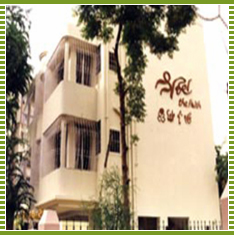
separate psychiatric institution was established in 1997 at Dahisar
in Mumbai from the proceeds of an art exhibition of leading Indian
artists, as well as the contributions of various donors. It had a
capacity of 20 beds with appropriate infrastructure and recognition
from the Government of India.
|
|
|
|
However, not all was easy going and the
residents of Dahisar resisted and took Shraddha to court for picking up
“roadside, psychiatrically disturbing elements” that they
perceived threatened their families with a bad influence.In a landmark
judgement delivered by the Honorable Justice A C Agrawal and S D Gundewar,
the much-abused section of society found its lawful place under the sun.
"The mentally-ill roadside destitutes".... emphasized the Mumbai High
Court, "are as much entitled to medical help as any physically indisposed
person".... and further observed that...."since the Foundation was engaged
in providing a care, food, shelter and rehabilitation facilities to
destitutes free of charge, it becomes every citizen's duty to support it
in whatever way possible."
|

|
Finally in 2006 a separate
facility of 6.5 acres was established on the outskirts of Mumbai
on the undulating grassy knolls of Karjat that presently services
120 patients. Over 10000 mentally-ill roadside destitutes have been
assisted off the roads, treated, rehabilitated and reunited with
their families in far flung villages and towns of States such as
Tamilnadu, Kerala, Orissa, Himachal Pradesh, and Assam. More
specifically, after the initiation of the karjat project in 2006,
9478 mentally ill roadside destitutes have been reunited with
their families.
|
|
|
Most of the funding has came from private donors, sponsored events, and
the corporate sector. Relationship building with the village panchayats
and the community at large has built trust and awareness. The board of
trustees and others have provided oversight of administration evolved
over the years. The staff which includes psychiatrists, medical
officers, psychiatric social workers and others have developed
mechanisms for treatment,
rehabilitation and reunion.
|
|
|
|
|
|
|